We’re always looking for ways to make learning with Kwiziq feel more comfortable and convenient – and we’re pleased to share some improvements we’ve recently made to the audio player.
Jump to exactly where you want
In our Readers and Podcasts, you can now drag the audio timeline to any point in the recording. If you missed a word, want to replay a tricky phrase, or just want to skip ahead, it’s now as simple as clicking and dragging.
No more pressing play and waiting. You’re in control of what you hear and when.
Set your own listening pace – on the blog
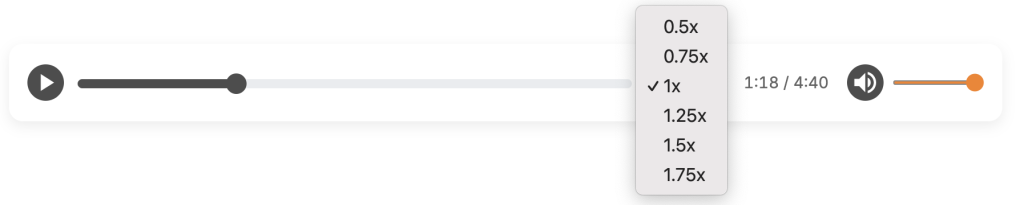
For our blog audio – where our podcasts live – we’ve also added playback speed controls. You can slow things down to catch every detail, or speed things up for a more challenging listen. Whether you’re a beginner who needs a little extra time or an advanced learner training your ear for natural speech, you can now adjust the pace to match where you are.
Why we made these changes
We know that listening is one of the most personal parts of language learning. How quickly you process spoken language varies enormously from one person to the next – and even day to day. We wanted the audio player to reflect that, giving you the flexibility to engage with content on your own terms rather than at a fixed, one-size-fits-all pace.
These might seem like small changes, but we believe they make a real difference to how comfortably and confidently you can work through our content.
As always, let us know what you think in the comments below – we love hearing how you use Kwiziq and what would make your experience even better.
Happy listening!